

Our Process
The Journey of a Tangabula Piece
Every Tangabula piece begins with intention. We design slowly, choose our textiles with care, and make in small numbers.
What follows is the path each garment travels, from a first idea to the piece that arrives at your door.
Where a piece begins
A garment starts as a question. How should she feel wearing it? Where will it move with her, through an ordinary morning, a long dinner, a journey somewhere warm? We design for real life and for years of wear, favoring silhouettes that stay relevant long after a season has passed. Nothing is made to follow a trend. Everything is made to be kept.
The textiles
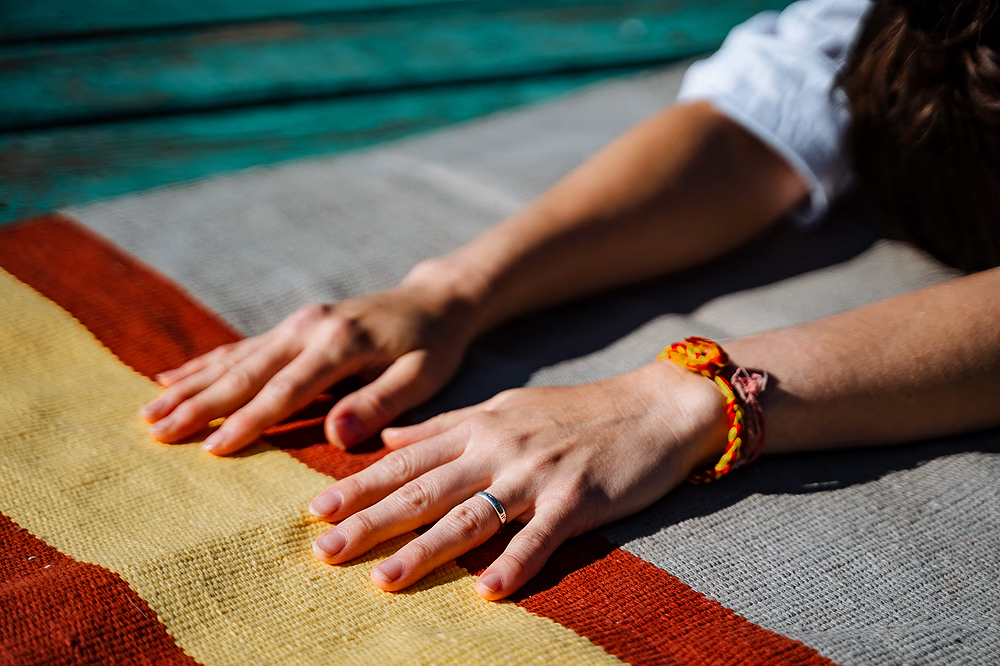
Cloth is where our heritage speaks most clearly. Our collections center on elevated African textiles such as Aso Oke and brocade, alongside other carefully selected woven and printed fabrics. Many of these carry generations of craft behind them, drawn from regions across the continent long known for their weaving and dyeing traditions. We choose each fabric for its hand, its weight, and the way it moves, never for how loudly it announces itself.

Cloth chosen for its hand, its weight, and the way it moves.
The making
Each design is then cut and constructed with a level of attention that large-scale production rarely allows. Seams are finished to last. Details are checked by eye before a piece is approved. The result is a garment that feels considered in the hand, because it was.
Made in small numbers
We produce in limited quantities, by choice. Smaller runs let us hold to our standards, waste less, and give each piece the attention it deserves. It also means what you own is quietly rare. When a piece is gone, it is often gone for good.
Meant to be kept
Tangabula was built as something to pass on. That belief shapes how we make. A well-made garment, cared for, can move through years and be handed to the next person who will love it. We would rather you buy less and keep it longer.
A note on natural variation
Because our textiles are woven and dyed using traditional methods, slight variations in color, weave, print placement, texture, and finish are natural to each piece. They are marks of authenticity rather than flaws, a sign that what you own is genuinely its own.