

Fabrics and Craftsmanship
The Fabric of Tangabula
Everything we make begins with cloth. Before a silhouette, before a single stitch, there is the fabric in the hand: how it falls, how it holds the light, how it feels against the skin. These are the materials at the heart of Tangabula, and the traditions that give them meaning.
Aso Oke
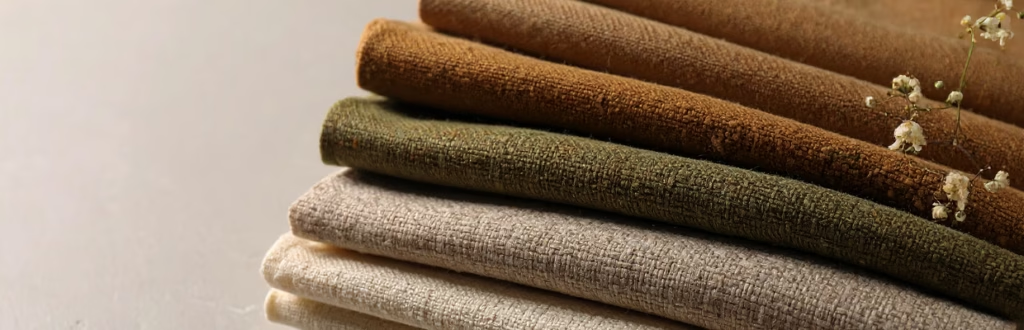
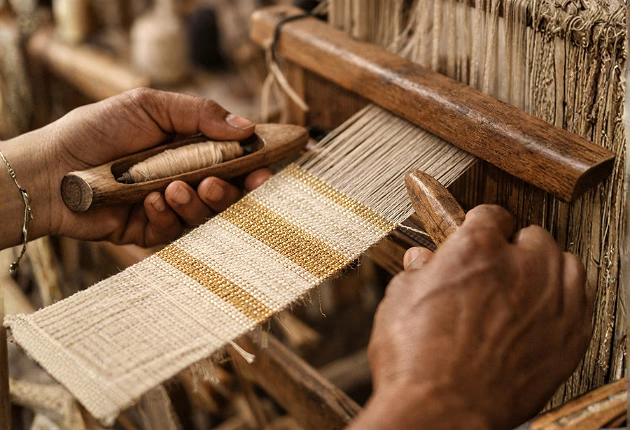
Aso Oke is the cloth Tangabula is built on. Woven by the Yoruba people of Nigeria, its name means “top cloth,” the fabric long reserved for a family’s most important days. It is traditionally woven by hand in narrow strips on a standing loom, then joined panel by panel into a single length.
Classic Aso Oke is firm and ceremonial. We chose a different quality on purpose, one noticeably softer than the traditional weave, so it could be worn and enjoyed every day rather than kept for special occasions.
Brocade
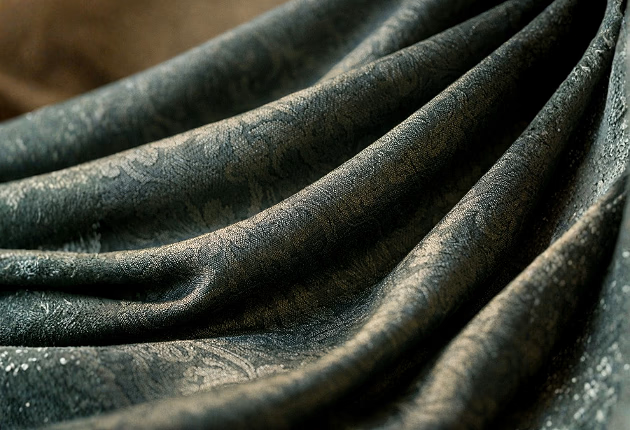
Brocade is light, richly woven fabric with a figured surface and a soft sheen, brocade brings depth and a sense of occasion to the pieces made from it.
Our soft brocade has a smooth feel, a gentle drape, and a subtle sheen that shifts quietly as you move. The metallic brocade goes further, its woven surface catching the light with a warmth that feels elegant rather than loud. These are the fabrics we reach for when a piece is meant to make an entrance while still sitting comfortably within the Tangabula palette.
The craftsmanship
The making of a Tangabula piece begins long before it is cut. It begins at the loom, where the Aso Oke is woven by hand, and in the careful choosing of each length of cloth for its weight, its hand, and the way it moves.
From there, every design is cut and constructed with a level of attention that large-scale production rarely allows. Seams are finished to last. Details are checked by eye before a piece is approved. The result is a garment that feels considered in the hand, because it was.
Caring for your pieces
Beautiful cloth lasts when it is treated gently. As a general guide, we recommend caring for your Aso Oke and brocade pieces with a soft hand: cool or gentle cleaning, no harsh wringing, a cool iron where needed, and storage away from direct sunlight so the colors stay rich for years. Specific care details accompany each garment. For the full method, fabric by fabric, see our Care Guide.
The Journey of a Tangabula Piece
Every Tangabula piece is made in small numbers and built to be kept. Read how a garment travels from first idea to your wardrobe